Daily Reflections
Day 7
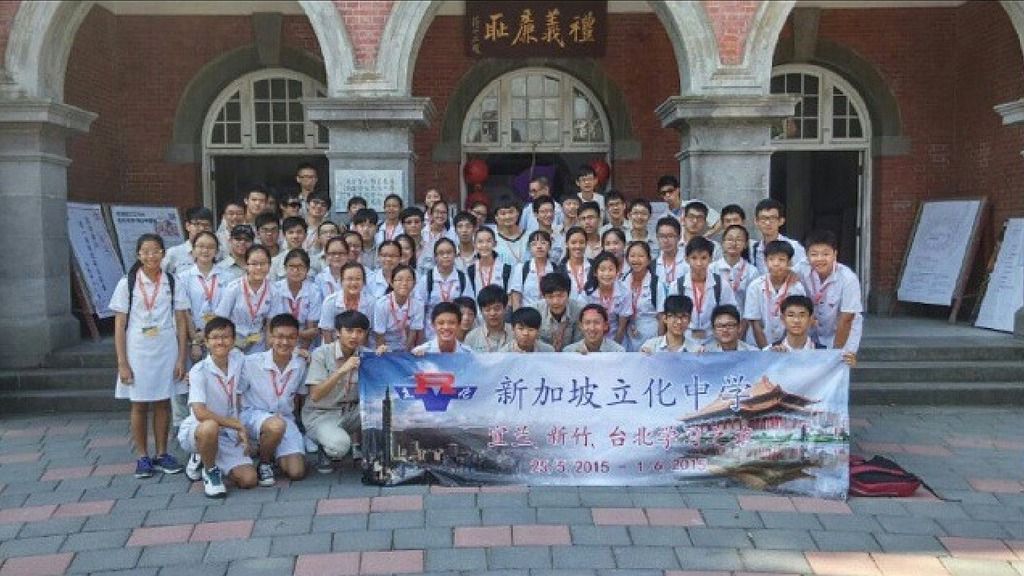
Firstly, we went to the National Palace a museum, which was filled with stuff that was donated by people. By looking at the intricate designs on the various pieces of jade work, it proved that the people designing it were very creative, signifying their diligence for producing beautiful jade art pieces. We should also learn their attitude by being creative in our project works. Secondly, we went to the Shung Ye Museum of Formosan Aborigines. We learnt the lifestyles of them and made us realise how fortunate we are to be living in a high-tech city and that we should appreciate the technology that we have. Lastly, we went to the Bo Pi Liao old street. The main thing that I have learnt is that development and preservation can both be met. The knowledge of the history of the place and other related stuff were shown in creative ways such as the building of the house activity, which is both fun to build and at the same time, lets us better understand the structure of the house. This would surely attract young children, who are least likely to be interested in learning the history of a place.
Day 6
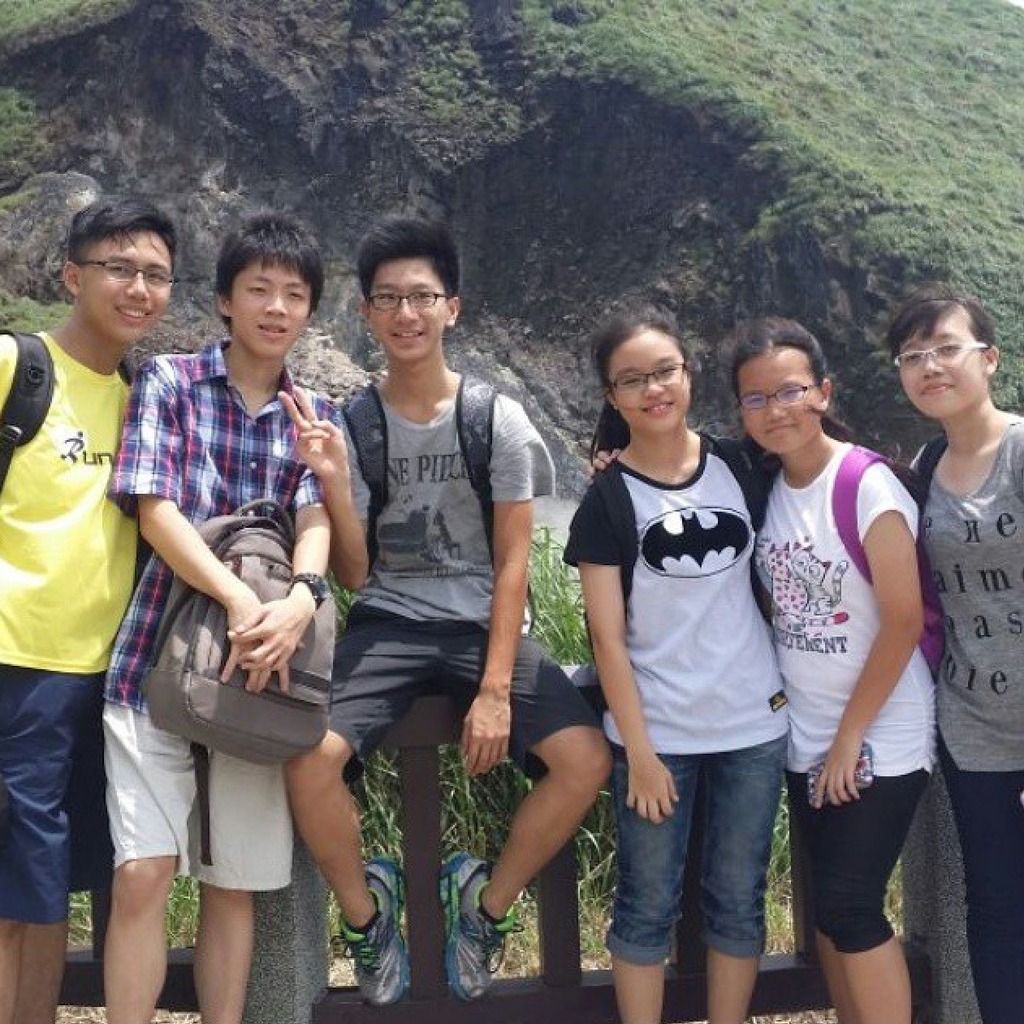
Today we went on a trip with our buddies. On day 5, my buddy, along with another two of my friends' buddies, told my two friends and I that we would be trekking on 阳明山. The main reason why the three buddies wanted us arranged for this was that they, seeing that the only hill that we have was the 164m Bukit Timah Hill, decided to let us experience true trekking. When we wanted to get there, we had to take a shuttle bus. The ride there was very bumpy and the bus kept turning to the extreme left and to the extreme right. Once, I almost lost my balance and fell. This made me realise how fortunate we are to have such good transportation services in Singapore and the fact that we should appreciate it. When we reached the foot of the hill, I was shocked at the steepness of the rocks that we were supposed to climb. We climbed upwards, stopping so many times due to tiredness and breathlessness. However, our buddies are patient to always wait for us everytime they were ahead of us. There was once we were even thinking of just giving up and going down! However, we decided to carry on and persevere. Our perseverance was rewarded with the breathtaking view that we got. This made whatever obstacles we experienced during the climb worth it. We truly experience the phrase "stepping out of our comfort zone" after that day. After that, we went to another bookstore. There were different levels selling different things, and the level that managed to capture our hearts was the fourth level, where all the stationery were. There was even a promotion that would let us have three gel pens free if we bought any three pens. Considering the promotion, those pens were really cheap! However, I did not buy any as I was too distracted in viewing other things and due to fact that I had no time. This teaches me to plan my time and priorities properly.
Day 5
Today, we spent the entire morning and afternoon at Jianguo High. We were firstly introduced to our buddies and were warmly welcomed by the teaching staff too. They also introduced their school, and their teaching style, which I find very interesting. After that, we went with our buddies to join them in their lessons. Most of the students were listening attentively, with the exception of some who were chatting among themselves. When I glanced around further, I realised that there were even some students who were sleeping and openly eating food! At first thought, I felt that they were just acting like normal teenagers, where we have pockets of conversations and tend to fall asleep and some even eat food secretly. So I didn't have that much of a reaction. It was until even when the teacher glances around and doesn't do anything then I was shocked. I was shocked that even the teacher didn't bother to do anything about this. I was terribly confused until Mr Mark Tan, one of the teachers who brought us there, explained to us about it. He said that the reason that they were given so much freedom was that they could control it. Plus the fact that they could switch between 'serious mode' and 'relax mode' easily and effectively. Later in the afternoon, we went to a local supermarket where we would be required to complete a part of our booklet as a CID group. We searched high and low and ran left and right for the items that we were required to find (not that we had to run, but we did for the fun of it :P). We then proceeded to buy a few things there as they were much cheaper than the ones sold back here in Singapore. After that, we went to Raohe Night Market. We were told that the entire night market is actually a straight line, meaning you just walk straight all the way and come out at the other end. There was one row of shops at either side of the night market, with double sided/two sided stalls in the middle. We tried a few of the food sold there and it was delicious. It was interesting to see how the store owners/stall oners try to make their products more appealing to consumers like us.
Day 4
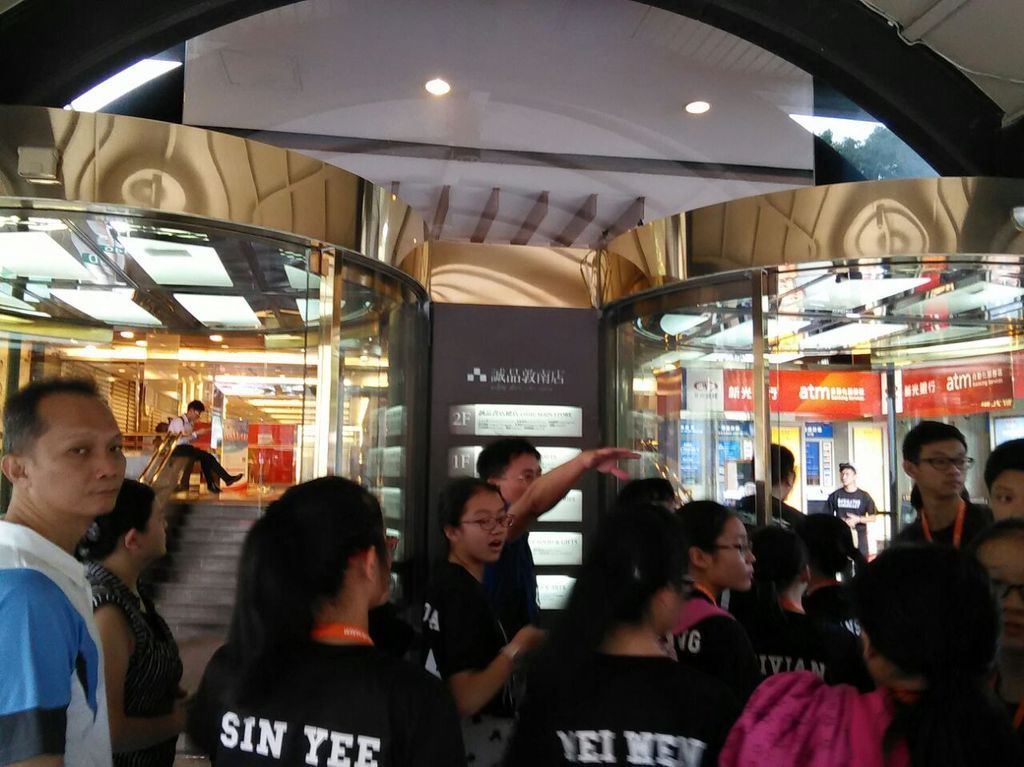
We started our day with a trip to Taipei Confucius Temple. There are many interesting features there. Some of them include the fact that there are no main doors to the temple, but there are small side doors. This fact shows Confucius's mindset that the journey of education is difficult and one has to work hard in order to squeeze through that small door to further and higher education. The next place that we went to is the Sun Yat Sen Memorial Hall in Taipei. We compared the differences between the one that we visited today to the one that we visited earlier on in Singapore and realised that the one in Singapore focuses on overseas Chinese that made contributions in Singapore while the one in Taipei is solely on Sun Yat Sen. After that, we went to the world famous Taipei 101. The first five levels are very wide, and the following ones are much smaller (each level gets smaller as it goes higher). One very interesting fact about it is that there is a damper which is used to counter the force of earthquakes in the event of one. This means that when the earthquake forces the building to move left, the damper would move right, countering the force of the earthquake. Last but not least, we went to the Eslite bookstore. It is not just a bookstore, it is also a shopping mall, a café and more. This raises both doubts and compliments. Since it is a bookstore, why does it have many other functions other than selling books? On the other hand, it deserves to be praised for its wise usage of space.
Day 3
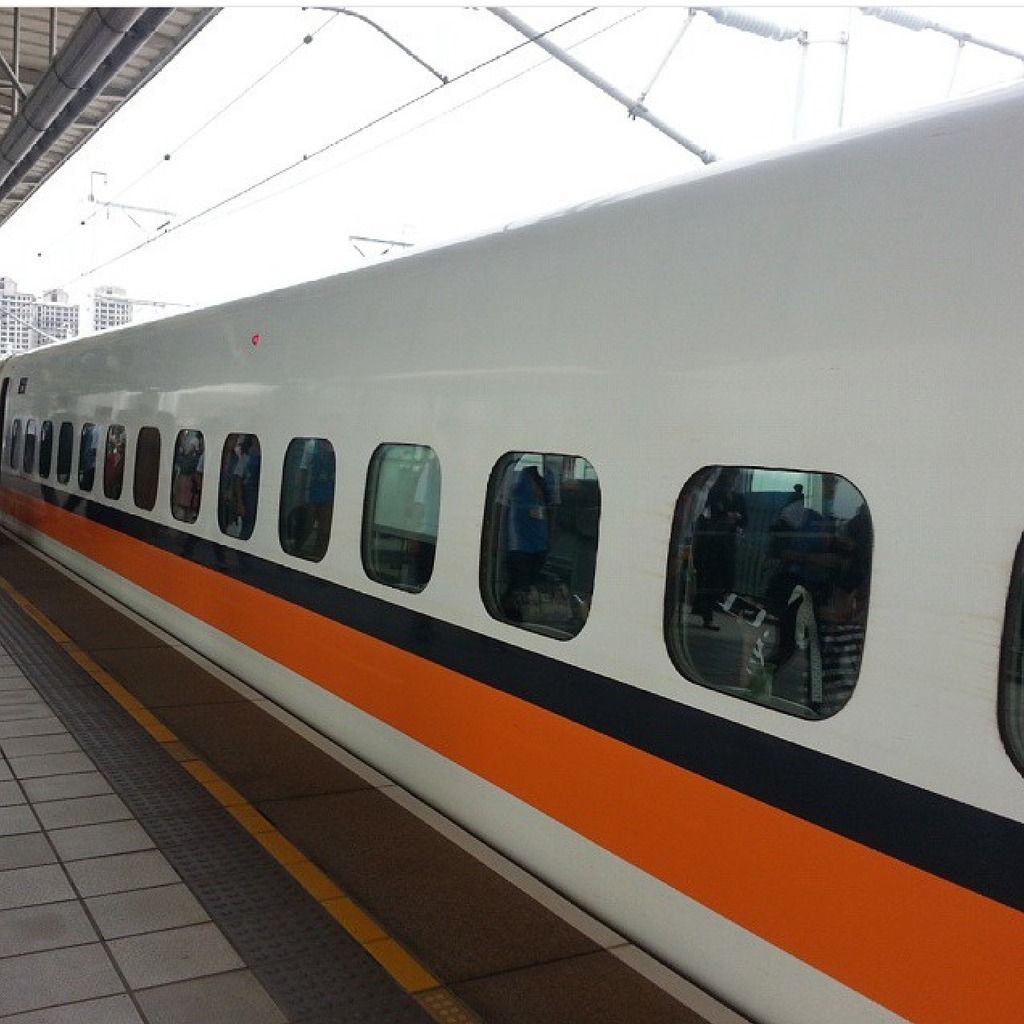
Today, we travelled on the high speed rail at Taipei station. Before we boarded the train, we were given 30 mins of free time to do whatever we wanted to do. Our group decided to make full use of the free time given to complete our CID missions. We went around the area in order to do that. We were very happy when we found out that we were able to complete 2 missions. After that, we went to the Hsinchu Science Park at Hsinchu. The place contained many popular and high-tech devices that many researchers developed. All of the devices were very impressive as they were what we would not have thought of. All these products would make people's life easier. We had fun trying out and exploring the different devices. After that, we went to the Spring Pool Glass Factory which was also in Hsinchu. It was about making glass products using recycled glass. We were shown the process of crafting the glass and even designed our own one. Some of us saw the process of spraying sand onto the cup that we had designed on. This shows the technological advancement of Taiwan. Next, we went to the Inner Bay Old Street. One first thought and look, one would think that it is very culturally preserved. However, when we thought deeper into it, we realised that it was not as cultural as it seems. One example can be seen at the Theatre, where the usual theatre activities were changed into other activities. Overall, this day was a fulfilling and an enriching one for me.
Day 2
Today is our last day at the farm. We had experienced many traditional activities that we did not get to experience back in Singapore. Some of these are the building of a kiln, leaf-printing our own t-shirts, rice sapling planting, and the feeding of various farm animals. When our CID group first started building the kiln, the main arch, or the 'door' or the kiln kept falling. This was probably due to our lack of teamwork. However, after minutes of hard work and perspiration, we finally managed to build the kiln. When I have finished printing my t-shirt, I felt a sense of accomplishment as I managed to print my very own t-shirt and this is my first time using leaves to print on a t-shirt. After that, when we planted the rice saplings in the paddy fields, I truly experienced the sweat and suffering of the farmers. This would make me appreciate every single grain of rice. Later in the day, we went to the Chiang Kai Shek memorial hall. We learnt many things about him, like his history, family, and life. This day was an eventful and a meaningful one. In the morning, we spent any available time that we have exploring the places and completing our missions. This would enable us to better understand the place or would save time and enable us to spend our time wisely.

Day 1
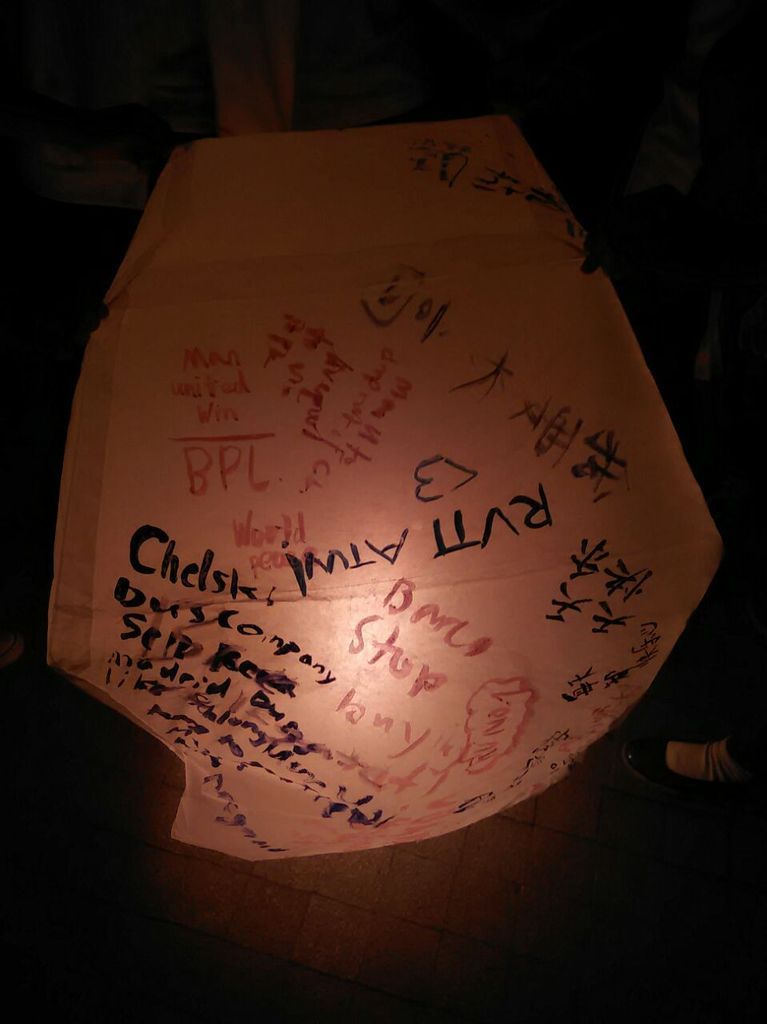
Today is the day where we would be leaving our family members and going overseas with our teachers and classmates. It felt very different for me to go overseas with by classmates and teachers as we have to be independent as we cannot depend on our classmates and teachers like how we depend on our parents. I was excited for the things to expect for the one week ahead. In the evening, when we arrived at 头城农场, we were asked to paint a sky lantern, which we would be releasing later on. It tests our creativity and teamwork as we have to fill the four sides of the sky lantern, and when we attach the skeleton to the sky lantern, we have to work together to make sure that it is properly attached. When we release the sky lantern, I felt a sense of accomplishment and achievement as this is my first time doing it.
Post OELP trip reflection
After going on this valuable trip, I personally learnt and experienced a lot from it. Of all the experiences I had, I have three that I feel are the most memorable and meaningful ones. These three experiences are the one I had at the Toucheng Farm, the one at Taipei 101, and the one I had at Jianguo High School.
During my stay at Toucheng Farm, I gained new knowledge about Taiwan. The most important knowledge is that I realised that agriculture is still present today in Taiwan. The reason why I treated this knowledge as new knowledge is because of my former thinking. I used to think that agriculture would be forgotten due to the development of the city. However, this trip proved my former thinking wrong. This knowledge made me realise that the Taiwanese government had probably realised that agriculture is important and had taken measures to make sure that it does not vanish. The reason for my thought is that Singapore does not have any major form of agriculture, while Taiwan has. It also made me wonder that Singapore's government should learn from the Taiwanese government and try to implement some major form of agriculture here, so that we do not have to rely on our imports from other countries for food.
When we were brought to the world's famous Taipei 101, I was stunned by the technological advancements and developments that Taiwan has achieved. The lift in Taipei 101 is the fastest lift in the world, using only 36 seconds to bring us up from the 5th level to the 89th level. Upon seeing the tall building, a question rose from my mind: Taipei 101 is such a tall skyscraper, wouldn't it have a high risk of toppling in the event of an earthquake? However, when I read the various information posters all around the 89th level, my queries were answered. There is a damper built in Taipei 101. Its purpose is to help counter the force of an earthquake in the event of one. It made me realise that when we do something, we have to plan and know what are the problems that would arise, enabling us to think ahead for a solution or the prevention for the problem. The reason why I have this realisation is due to the fact that we, as Singaporeans, are blessed with the fact that we have no natural disasters, and that it would not make us think of that aspect.
For my experience and thoughts on the day of the school exchange programme with the Jianguo High School students, it would be limited as they would only be based on what I experienced at Jianguo High. Thus, my thoughts for Taiwanese schools would be based on what I heard and asked from the students from Jianguo High. I realised that schooling in Singapore and Taiwan has some similarities. According to my Jianguo buddy, when they were studying in secondary school, they had a lot of homework, which is similar to what we have in Singapore. Secondly, I realised that their teachers like to split them into groups to facilitate discussion. Likewise, this is also present in Singapore. This made me realise that actually, the education system and the style of teaching is actually quite similar in the two countries and the reason is because of our similar experiences. However, in Jianguo High, the students are given much more freedom that any other school in Singapore. This makes me wonder what they did to gain the teachers' and even the principal's trust to give them more freedom than us. This could be due to their ability to switch between relaxed mode and serious mode quickly and efficiently. We Singaporean students often complain that our schools have too many rules. However, this is all due to our inability to make use and control of the little freedom that we so rarely have. I believe if we all can work together and try to use and control our freedom wisely, we can perhaps convince the school that we can handle our own freedom properly and than we would be able to gain just a little bit more of it.
We have also been to many religious and commemorative places, where their values and beliefs are. Two of these that I have learnt is their preserving and their commemorating efforts, which could be seen in the Taipei Confucius Temple, the Chiang Kai Shek Memorial Hall, the Sun Yat Sen Memorial Hall, the National Palace Museum and the Shung Ye Museum of Formosan Aborigines.
Let me start off with the value of preservation. The places which shows this value are the Taipei Confucius Temple, the National Palace Museum and the Shung Ye Museum of Formosan Aborigines. These places have been preserved either physically or mentally, which simply means either the place itself is preserved, like the Taipei Confucius Temple, or it contains preserved items, like the National Palace Museum and the Shung Ye Museum of Formosan Aborigines. The Taipei Confucius Temple is preserved quite well, with most, if not all, of the features and structures are still present today, while the National Palace Museum and the Shung Ye Museum of Formosan Aborigines shows the items in the Palace and the lifestyle of the aborigines respectively. After going to the various places, and learning many facts about the place and the culture, I realised that the preservation of a place is not only to let people know more about the place, but also to let people know the significance and the culture that once inhabited the place. The reason for this realisation is my former thinking that the preservation of a place is just to let people know the place better. However, after going to the places stated above, I realised that my former thinking is wrong.
Secondly, and lastly, I shall now discuss commemoration with regards to their beliefs. The places that project this belief that commemoration is very important are the Chiang Kai Shek Memorial Hall and the Sun Yat Sen Memorial Hall. Both men were remembered for their great contributions to Taiwan through memorial halls that were built to let people know of their contributions. There were even guards to guard the place, which shows how much they looked up to the two men. This made me realise that we should not forget our roots and appreciate those who helped us in one way or another. The reason for my realisation is because of how much the Taiwanese people respect the people who helped to bring Taiwan to where it is today.
The above states my learning points for this trip. I have greatly and truly benefitted a lot from this trip.
Montage for:
-What is the Singapore youth culture

-What I think is the Taiwan youth culture

Let me explain my choice of pictures for each montage.
Singapore youth culture:
Singaporean youths generally like to listen to k-pop music, hence my choice for that picture. Due to the hot climate of Singapore, teenagers in Singapore generally wear a T-shirt with either shorts or pants. We also go through a very well planned out education system, and have our Singapore Youth Festival to let our young show their talents. We, as youths, tend to use Singlish and abbreviations when texting and chatting with our peers. We also use social media a lot, and "stomp" a lot too.
Taiwan youth culture:
The bubble tea drink is very popular among Taiwanese youths, which explains my choice of this picture. The students generally lead a study-based life: they study with whatever time that have, leaving little or no time for recreation. However, as time passes, the government has changed that, allowing Taiwanese students to have some recreation time. The KTV is a leisure place that is very popular with Taiwanese students, where it allows them to relax. The night market is the Taiwanese teenagers' favourite place to shop as there is a wide variety of items sold there.
Cid reflection
In the lesson on the 10th of April, we learnt about the icons of Singapore and expressed our views as to whether the Merlion would make the best national icon of Singapore.
The Merlion is made out of a lion's head and a fish's tail. The lion head represents the name, Singapura (lion city), which Sang Nila Utama had bestowed upon our island upon discovering a lion. The fish tail represents Singapore's history of once being a fishing village.
Even though the Merlion shows Singapore's history, but it does not show all of it.
The statue of Sir Stamford Raffles is made to commemorate a great man who set up trading ports which in turn made Singapore a popular trading place. However, it still does not show our culture and progress. Thus, it would not serve as the best national icon of Singapore.
Over the years, Singapore has come up with the NEWater system, where our waste products can be recycled and purified to form clean water. Even though this shows Singapore's progress from a water scarce country to a country that has sufficient water, it does not show our culture. Hence, NEWater would not be the best national icon of Singapore.
Singapore is made out of people of many races, and to commemorate this bond that we have, we have set aside a day called the racial harmony day. This shows our multiracial culture. It was not easy to get the people from different races to accept one another's difference. In the past, there were many racial disputes, causing harm and danger to innocent parties. However, after many events, they set aside their differences and live in harmony. This shows Singapore's progress and history.
In conclusion, I feel that the Merlion should not be the best national icon of Singapore as it does not show progress and culture. However, the racial harmony in Singapore shows progress, culture and even the history. Thus, I feel that the multiracial society of Singapore would be the best national icon of Singapore.

Cid reflection
In the lesson on the 27th of March, we learnt more about China. The teacher gave us an introduction of China's history and culture. She said that the golden age of China is during the Tang dynasty. It was because it was the most prosperous period in the history of China.
Further into the lesson, we were asked to research on the different aspects of the Tang dynasty's success. Our group was assigned the aspect of Science and technology. When we first heard what our research aspect was, we were baffled. This was because we thought that there were no technology and cannot believed that Science actually existed in the past. However, after researching, we realised that Science and technology actual meant the inventions that the people of the Tang dynasty had made. We realised that they have made many noble inventions such as gunpowder, paper money and even the air-conditioner.
We were consequently shown some pictures about different items from the East, most likely originated from China, and the West. We were asked to identify which one is from China and why we knew that that was China. We were first given two paintings, then two gates and more. When we were questioned, we said that we were able to identify which is which as a result of the methods and preferences.
Finally, we were asked to reflect whether Singapore is in her golden age. I personally think that she is. This year is Singapore's 50th year of independence. Based on the term "golden jubilee", I can safely say that Singapore is in her golden age. Of course, my answer cannot be based on a word. Singapore has transformed tremendously within the last 50 years, from a fishing village which other people looked down upon, to a flourishing garden city, known and respected by all. With this achievement that Singapore had made, isn't Singapore in her golden age?

Cid Reflection
I think the main reason as to why China opened up their country to international trade and welcome foreign investors to invest in the country over the past two decades is that they have found a way to promote economic growth in China. They have realised that due to the lack of jobs, China has been unable to have economic growth. Thus, by opening up their country to international trade and welcoming foreign investors to invest in the country, more job opportunities would be created for the Chinese and thus, China would grow in its economy.
Since China is opening up to international trade, many foreign investors would go there to invest due to the huge population of China, which is 1.3 billion. When the foreign investors set up factories in China, there would be jobs for people who are currently unemployed. Since there are more unemployed people than the number of places of a job (supply is more than demand), the employers would be more than happy to decrease the starting salaries of the workers. When the salaries of the workers are decreased, the employers could offer a low price for the products they produce, attracting people to go to China to buy their products. Thus, China would have economic growth.
This would affect Singapore in both good and bad aspects. When China's economy grows, the Chinese people in Singapore stand to gain as they are educated in Chinese and thus can communicate with the Chinese in China. We would then have a better chance of than people of other countries to invest in China. Thus, we as Singaporeans could easily create strong bonds and do business with them.
However, there are flip sides to everything, not excluding this. When the prices of goods in China are low, many people would flock to China. People who are planning to come to Singapore might even go to China instead. This would then decrease tourism in Singapore, which would decrease economic growth in Singapore. Thus, I can conclude that the economic growth in China would impact Singapore both positively and negatively.
All in all, the growth in China's economy has affected and changed its fate in the world. Now, China is ranked the second in terms of the total GDP and many people are currently investing in China.

Reflection on communication and aging population
During the lesson, we were spilt into groups in order to play a game. The first person was allowed to see a picture and jot down notes about it within a certain time frame. He or she then tries to tell as many details as possible to the next person within the given time, and that person isn't allowed to jot down notes. The second person tells the third person and so on. When the second last person tells the last person, the last person is required to draw out the picture within a few minutes. After all these, we compared the difference between our original picture and what was drawn. The big difference in the two pictures shows how bad our communication skills were.
From this activity, I learnt about the importance of communicating effectively. When we communicate effectively, everyone would be able to understand our words as they are clear. This will ensure that the work is carried out smoothly and that there will be no misunderstandings. On the other hand, if we do not communicate effectively, we will find that the instructions are not clear and that there will be many doubts. The final product would even differ from the original idea due to the lack in efficiency of communication.
The picture that we were shown was one about aging population. The picture shows a baby supporting his parents who in turn support their parents. This means that the parents have to work doubly hard to provide for the four grandparents that they have. They themselves will only be supported by that one baby that they have. This picture also shows that the parents are struggling to support the grandparents and as time goes on, they themselves might collapse of fatigue.
We also talked about the 'one-child policy'. It is about allowing families to only have a single child. However, modifications have occurred and now families are allowed to have a second child only fs the first child is a girl.
I think that this policy has its own good and bad points. It controls the population in certain countries and ease their burden. This will ensure that everyone will have enough food to eat and that the place will not be overly populated. However, it also reduces the number of people in the new generation, meaning that there will be fewer children to take care of their parents. This also means that the future generation will have a greater responsibility in supporting the previous generation.
With the present situation of dwindling population in Singapore, I predict that in the future, Singapore will face many problems.
When the population in Singapore decreases, it means that there will be fewer people in the coming generations. This would mean fewer people to work as a way of contributing to society. This would lead to Singapore generating less money and thus, would lead to economic loss. When a couple gives birth to a child, that child is expected to take care of the daily needs of his or her parents when they get old. If one is the only child of the family, he or she would have greater stress. This is because he or she has to provide for two more mouths and thus would have to work doubly hard to earn more money. The number of people in Singapore would also drop slowly. Sooner or later, there will be no people living in Singapore and Singapore would be a deserted island.
However, it is not too late to prevent the above from happening.
The government has used some methods to encourage people to give birth, especially Singaporeans. One such method is the baby bonus scheme, where a certain amount of money is given to couples when they produce a certain number of babies. I think this scheme is a good one as not only does it serve as an encouragement for couples, but it also helps to ease the burdens of couples who might be facing financial difficulties.
Other than that, another scheme that I find is very effective is the SG50 Baby Jubilee Package. It is a package made specially for babies born this year. It contains many useful and interesting items for the family. The package is a very good idea as one, it commemorates Singapore's 50th year of independence, and two, it also encourages couples to give birth. I think that this package is a good one as it is both beneficial to parents and their children.
To ensure that the newborn babies are being taken care of while the parents are at work, more affordable childcare centers could be set up. This would put many parents minds at ease as they do not have to worry about the inconvenience of taking care of a baby.
I believe that with all these schemes, Singapore would not be in a state where its population decreases so quickly that one day there would not be anybody left here.
All in all, I think that I have learnt many things from this lesson.

Reflection on CID lesson on 30 January 2015
The teacher showed us a story about how a husband abandoned his wife in order to get on the lifeboat to save himself. When I was asked to express my opinion, I thought that the husband was too cruel to have left his wife alone. After that, she then showed us what actually happened. What actually happened was that the wife was sick and they had a daughter. In order to save their daughter, the husband had no choice but to abandon his wife and save himself. After hearing the true story, I realised that the husband was actually sparing a thought for their daughter who was very young then. I realised that I shouldn't have jumped to conclusions and should have thought more deeply than just merely looking at the surface of things. I also should have thought of the bright side instead of thinking everything was bad.
After that, she showed us a picture of the Little Inda riot. We were also asked to express our first thoughts upon looking at the picture. Many of us felt that they shouldn't have started hitting and fighting with the police just because of an accident. Since it was an accident, the driver didn't mean to hit the foreign worker. After that, the teacher showed us a video about the living environment of a foreign worker. They didn't even have proper houses to live in, let alone proper furniture and sewage system. After watching the video, I sympathise with the foreign worker. It was then that I realised that the reason why the riot happened was probably that the foreign workers felt that the foreign worker who died died unjustly. this made me feel that I shouldn't have looked at one side of things, I should have looked at both sides before judging.
All in all, this lesson made me feel that I should change my mindset and that I should not judge a book by its cover.

Poverty in Singapore reflection
Poverty is the state of being extremely poor. It happens when one is not able to meet his or her daily needs.
In Singapore, even though we have developed into a rich and urban country, there are still people left behind and facing poverty. These people have many reasons as to why they face poverty. It might be due to the fact that they are not properly educated, resulting in the difficulty of finding a job. It might also be the fact that the elderly, due to their simple mindset, get cheated by their own children of their flat and maybe jewelry.
Fortunately, the government realises the need to help those who are in need and has lent a helping hand to them. When we go out to work, a portion of our salary is put into our Central Provident Fund (CPF) account which could be used to buy a flat. When we retire, the government then lets us withdraw a certain amount of money in order to provide for ourselves. The money is our CPF helps to provide us during our last years.
I think that putting aside money as our CPF money is a good idea. It is similar to our savings, except that we only can withdraw money from this account after we reach a certain age. Our CPF money can act as backup money in case we get cheated out of our other savings. However, we must also be wary of people that are eyeing our CPF money.
The government has another way to help people facing poverty. People who want to help these people facing poverty can donate either money or necessities to voluntary organisations, who will then buy items and distribute among the beneficiaries as a form of help. The government will also subsidise school fees for the students in families facing poverty to ease their parents burden.
I think that this method of helping people is a very good way. This is because the families would not have to worry much about their life expenses as the government will be helping them.

December holidays reflection
During the first week of the school holidays, I went to a senior activity centre for my via which was compulsory for my cca. It involves having to teach the elderly things and communicate with them.
I think doing via is a meaningful activity as we get to help people who require our help and attention. We also get to communicate with them and understand their lifestyle and the problems they face. When I am communicating with the elderly, I realise that they enjoy coming to the centre as they can learn and play and even win prizes. When I was helping in the hosting of an activity, I can see that the elderly are very open minded and that they make friends easily.
This via activity makes my December holidays more enjoyable.


No comments:
Post a Comment